The Devil Movie Hdhub4ur 2025 Review Details
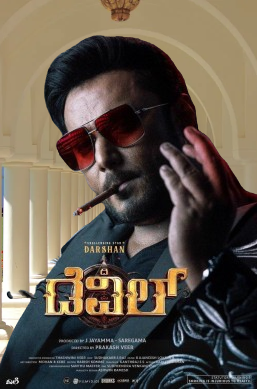
The Devil (2025) Review – Prakash Veer’s Big Test: Visionary Political Fire or Familiar Mass Formula?
I’ve followed Kannada cinema’s director-driven shifts for years, and when a filmmaker chooses to write, direct, and co-produce his own debut-scale political action film, it instantly signals ambition. The Devil isn’t just Darshan’s comeback vehicle — it’s Prakash Veer stepping into the 2025 director spotlight, staking his claim with scale, politics, and unapologetic mass cinema.
At a thematic level, The Devil (2025–2026) explores corruption, power, and moral transformation through the dual lives of Dhanush and Krishna. Prakash Veer attempts to blend political realism with larger-than-life heroism, positioning the director’s vision as the invisible hand shaping every punch, pause, and proclamation.
| Department | Name |
|---|---|
| Director / Writer | Prakash Veer |
| Lead Actor | Darshan Thoogudeepa |
| Female Lead | Rachana Rai |
| Antagonists | Mahesh Manjrekar, Achyuth Kumar |
| Cinematography | Sudhakar S. Raj |
| Editor | Harish Komme |
| Music Director | B. Ajaneesh Loknath |
| Action Directors | Ram Lakshman |
| Co-Directors | Mohan Malagi, B. Thimme Gowdaa |
Legacy Hook: A Director Walking Into the Lion’s Den
Prakash Veer didn’t play it safe. Instead of a contained debut, he mounted a politically charged mass entertainer led by one of Kannada cinema’s most scrutinized stars. That decision alone defines his mindset — bold, high-risk, and uncompromising.
With Darshan’s stardom and real-world baggage looming over the project, Veer’s reputation was tied directly to how confidently he could control narrative tone, scale, and messaging without losing grip.
Insight: This isn’t a cautious debut — it’s a statement attempt. Takeaway: Veer wanted attention, not approval.
Vision Summary: What Was the Director Trying to Say?
At its heart, The Devil is Prakash Veer’s commentary on systemic rot and the illusion of power. The dual-role structure isn’t just a mass gimmick — it represents the transformation of an ordinary man into an uncompromising force shaped by betrayal.

Veer frames politics as theatre — where loyalty is transactional and morality bends under ambition. Rather than preach, he packages these ideas inside stylized confrontations and heroic symbolism.
Insight: Politics is treated as an ecosystem, not a backdrop. Takeaway: The film wants to feel relevant, not just loud.
Directing Style Evolution: Fresh Voice or Familiar Grammar?
Prakash Veer’s direction borrows heavily from established mass-film grammar — slow-motion entries, punch-dialogue pauses, and musical elevations. However, what separates him slightly is restraint in over-stretching these tools.
He allows scenes to breathe before detonating them. Political meetings are staged with tension rather than constant background noise, and confrontations rely on eye contact and silence as much as dialogue.
Insight: Veer understands when not to shout. Takeaway: Control is visible, even within mass moments.
Screenplay Tightness: Where the Grip Slips and Holds
The screenplay structure is largely linear, prioritizing emotional payoff over surprise. Prakash Veer takes his time establishing political hierarchies, sometimes at the cost of pacing.
While the first half sets up motivations clearly, portions of the middle act lean heavily on exposition. However, Veer compensates with high-stakes confrontations and visually driven storytelling.

Insight: The film explains more than it needs to. Takeaway: Tightening could’ve elevated impact.
Unique Selling Point: Veer’s Signature Touch
The biggest USP of Prakash Veer’s execution lies in how he stages power. Unlike typical mass films where villains are caricatures, here antagonists are given space to dominate scenes.
Mahesh Manjrekar’s Chief Minister is framed not as a loud tyrant but as a composed authority figure, while Achyuth Kumar’s Anant Nambiar operates in shadows. This grounded portrayal amplifies Darshan’s eventual rise.
Insight: Strong villains sharpen the hero’s edge. Takeaway: Veer respects narrative balance.
| Film | Director Phase | Scale & Ambition |
|---|---|---|
| The Devil | Early Career | Very High |
| Not specified | Not specified | Not specified |
| Not specified | Not specified | Not specified |
Technical Collaboration: Vision Meets Craft
Prakash Veer’s clarity reflects strongly in technical departments. Sudhakar S. Raj’s cinematography mirrors the director’s intent — grand rallies feel overwhelming, while personal moments stay intimate.
Editor Harish Komme ensures action sequences stay impactful, even if narrative sections stretch. Ajaneesh Loknath’s background score functions as Veer’s emotional translator, turning intent into sensation.
Insight: Technical teams are aligned with the director’s pulse. Takeaway: Execution matches ambition.
Future Potential: What This Means for Prakash Veer
The Devil positions Prakash Veer as a director comfortable with scale and political themes. While refinement is needed in pacing and narrative surprise, the confidence on display is undeniable.
If Veer applies this visual control and thematic clarity to a tighter script in future projects, he could evolve into a strong mass-action storyteller with substance.
| Aspect | Concept | Execution |
|---|---|---|
| Political Theme | Strong | Mostly Effective |
| Mass Elevation | High | Delivered |
| Screenplay Flow | Moderate | Uneven |
FAQs
Question: Is The Devil a director-driven film or a star vehicle?
Answer: It balances both, but Prakash Veer’s control over tone and staging is clearly visible.
Question: Does Prakash Veer bring anything new stylistically?
Answer: His restraint in power dynamics and villain portrayal adds freshness within a familiar mass format.
Question: What does this film mean for the director’s future?
Answer: It establishes him as a confident large-scale filmmaker with room to grow stronger narratively.
Ratings are purely my take after multiple watches — your experience might differ!