Parasakthi Movie Hdhub4ur 2025 Review Details
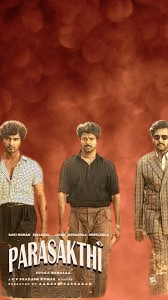
Parasakthi Review – Sudha Kongara’s Most Politically Charged Film Yet or Her Toughest Balancing Act?

I’ve tracked Sudha Kongara’s career closely, and Parasakthi feels like a deliberate pivot. This is not the comfort-zone Sudha of inspirational biopics alone; this is a filmmaker stepping into volatile political history with conviction. The very choice of the 1965 Anti-Hindi agitations signals intent — to provoke thought, not just applause. In the current 2025 director spotlight, this move instantly positioned Parasakthi as one of the most closely watched Tamil films.
Check showtimes, seat availability, and exclusive offers for the latest movies near you.

Parasakthi explores how student-led resistance in 1960s Tamil Nadu evolved into a cultural awakening, following a young agitator’s ideological transformation while examining power, language, and collective identity through a grounded yet mass-accessible lens.
| Department | Key Contributors |
|---|---|
| Director & Writer | Sudha Kongara |
| Story | Arjun Nadesan |
| Additional Screenplay | Ganeshaa |
| Dialogues | Madhan Karky, Shan Karuppusamy |
| Cinematography | Ravi K Chandran |
| Editor | Sathish Suriya |
| Second Unit Director | Milind Rau |
| Historical Consultant | Professor Dr. A. Ramasamy |
Vision Summary – What Was Sudha Kongara Trying to Say?
At its core, Parasakthi is about awakening — not just political rebellion, but personal responsibility. Sudha Kongara frames language not as a slogan, but as lived identity. Her vision avoids glorifying violence; instead, it dissects the emotional toll of resistance.
Rather than positioning Sivakarthikeyan as a mythical savior, she portrays him as a flawed, evolving participant in a much larger movement. Authority figures, ideological mentors, and family voices all shape the narrative, making the film less about one hero and more about collective transformation.
Insight: Sudha Kongara’s vision prioritizes emotional truth over easy political messaging.
Takeaway: Parasakthi aims to document a mindset shift, not rewrite history.
Directing Style Evolution – Familiar Strengths, Sharper Edges
Fans of Sudha Kongara will recognize her signature traits — grounded realism, emotionally charged confrontations, and strong character motivations. However, Parasakthi introduces sharper political edges and reduced hand-holding.

Unlike her earlier work where inspiration arcs followed a clear rise-fall-rise pattern, this film embraces moral ambiguity. Scenes are allowed to breathe, even if they slow the pace. Silence, hesitation, and ideological doubt are treated as narrative tools.
This evolution may surprise audiences expecting a rousing mass entertainer throughout.
Insight: Sudha Kongara trusts the audience more than ever.
Takeaway: This is a mature filmmaker refusing formula comfort.
Screenplay Tightness – Controlled Chaos or Narrative Risk?
The screenplay walks a tightrope between mass appeal and historical responsibility. The first half moves with urgency — protests ignite quickly, relationships form naturally, and ideological debates feel organic.
The second half deliberately slows down. Arrests, sacrifices, and political consequences take precedence over spectacle. While this deepens realism, it also tests patience for viewers expecting consistent elevation.
Sudha Kongara’s decision to avoid a conventional high-octane climax reinforces her commitment to authenticity, even at the cost of instant gratification.
Insight: Pacing reflects reality, not commercial expectation.

Takeaway: The screenplay chooses meaning over momentum.
Unique Selling Point – The Director’s Signature Touch
The true USP of Parasakthi lies in how Sudha Kongara humanizes history. Protesters aren’t faceless crowds; they are sons, daughters, friends, and students with doubts and fears.
Her collaboration with Professor Dr. A. Ramasamy ensures speeches, marches, and political rhetoric feel rooted in documented sentiment rather than cinematic exaggeration. Even antagonistic authority figures are given ideological grounding instead of cartoon villainy.
This balanced portrayal makes Parasakthi stand out in a space where political films often lean towards extremes.
Insight: Authentic consultation elevates cinematic credibility.
Takeaway: The director’s restraint becomes the film’s strength.
| Film | Position in Career | Directorial Risk Level |
|---|---|---|
| Soorarai Pottru | Career-defining | Moderate |
| Irudhi Suttru | Breakthrough | Moderate |
| Parasakthi | Ideological Pivot | High |
Future Potential – What Parasakthi Means for Sudha Kongara
Parasakthi positions Sudha Kongara as one of the few mainstream Tamil directors willing to engage deeply with politically sensitive material without sensationalism. This film may polarize, but it also expands her creative credibility.
Going forward, this opens doors for more historically grounded, research-backed cinema from her — possibly even beyond regional boundaries.

Insight: Parasakthi reshapes Sudha Kongara’s public image.
Takeaway: She emerges as a filmmaker unafraid of discomfort.
| Aspect | Concept | Final Execution |
|---|---|---|
| Thematic Depth | Strong | Effectively Delivered |
| Political Balance | Risky | Mostly Controlled |
| Mass Accessibility | Moderate | Selective |
Frequently Asked Questions
Question: Is Parasakthi Sudha Kongara’s boldest film?
Answer: Yes, both politically and narratively.
Question: Does the director take sides politically?
Answer: The film presents perspectives without overt propaganda.
Question: Will this direction impact her future projects?
Answer: It positions her for more serious, research-driven cinema.
Ratings are purely my take after multiple watches — your experience might differ!